

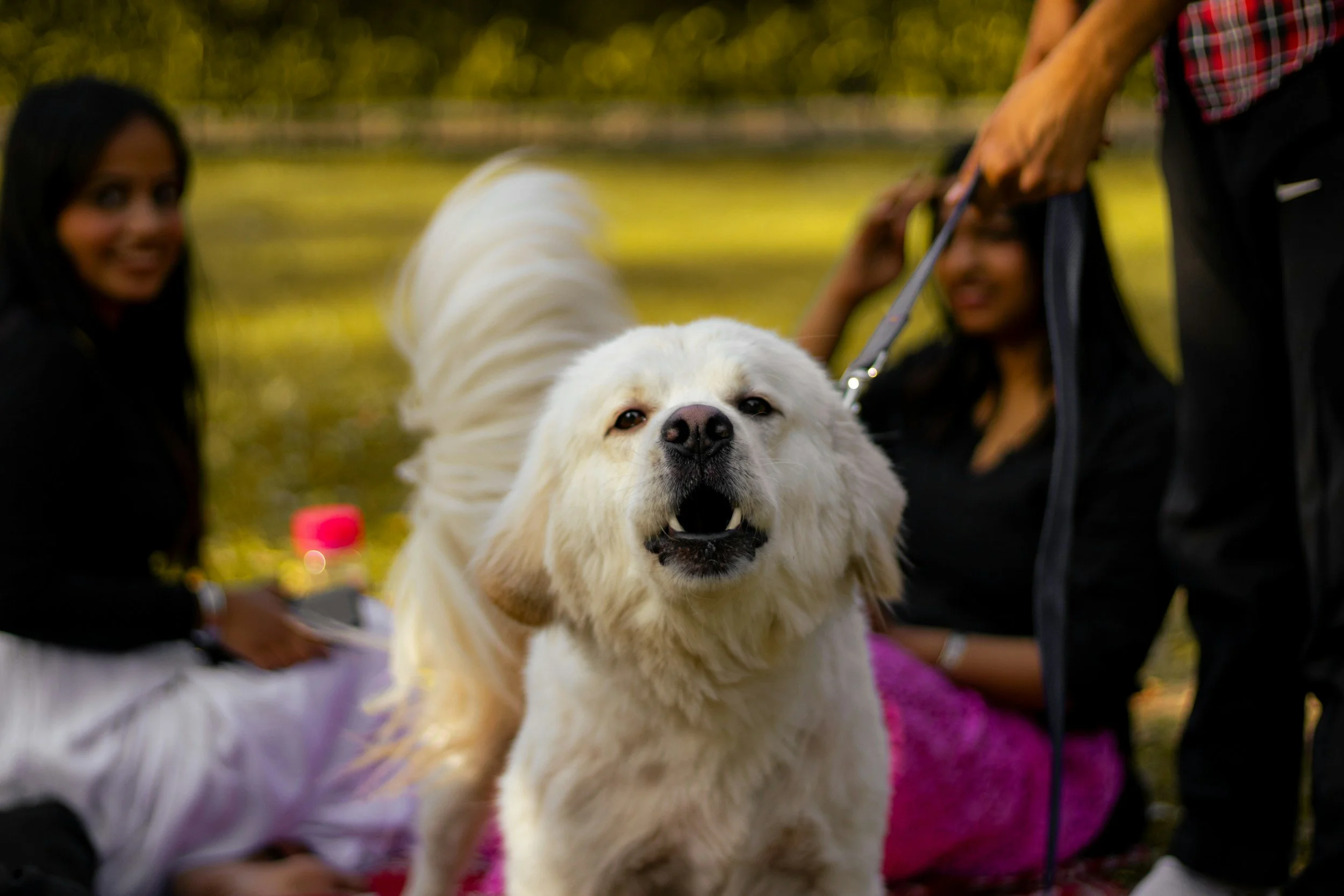
REACTIVE SPICE CAKES & NERVOUS NELLIESBehavioral Training
Behavior change doesn’t start with the dog. It starts with the human. Someone willing to understand who their dog actually is, not who they wish they were. And someone willing to lean into discomfort… and stay with it long enough for things to change.


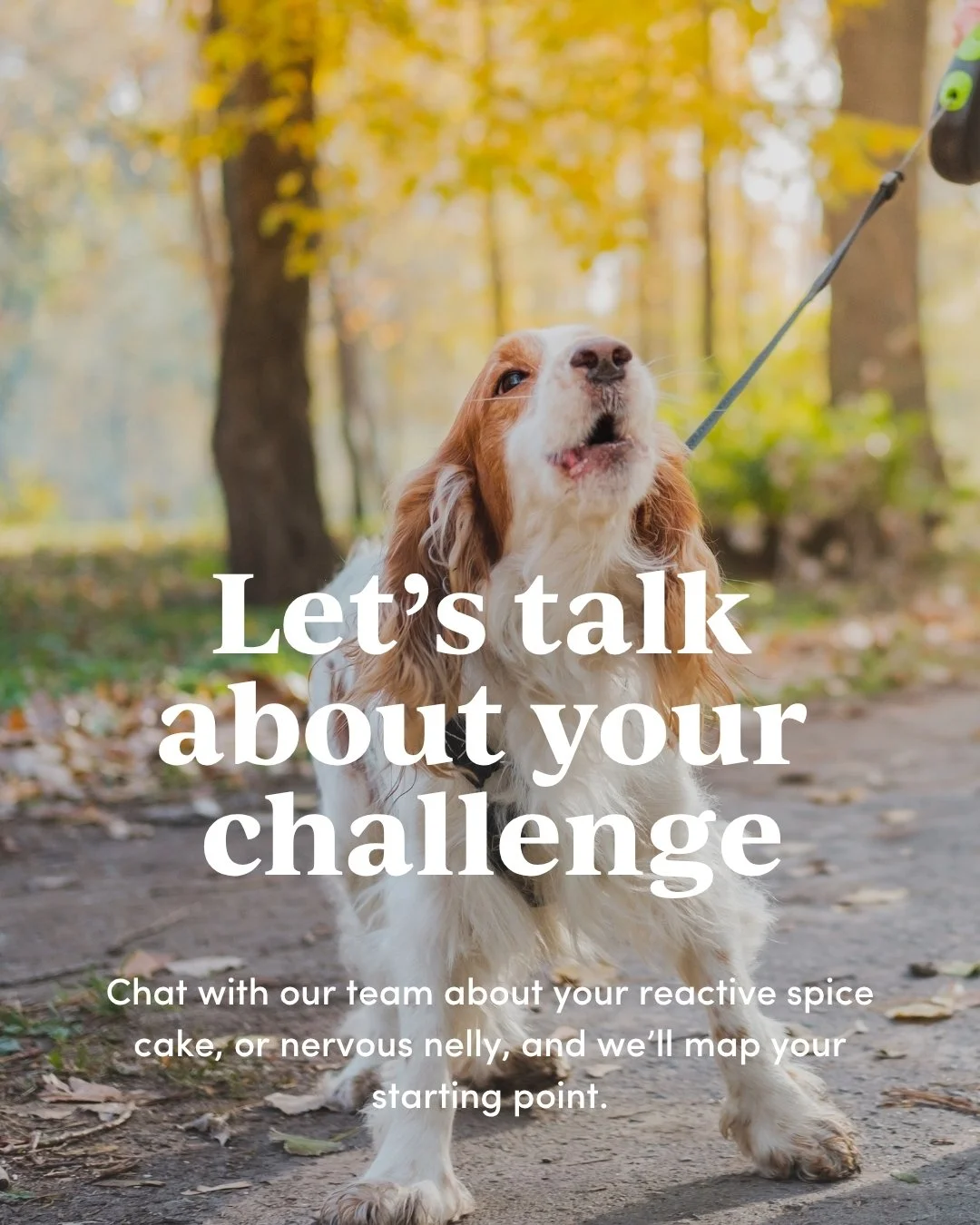
Behavioral FAQs
-
A behavioral challenge is anything that keeps your dog looping stress related behaviors. Sometimes it looks like barking, lunging, growling, crate frustration, leash pulling, and reactivity. Sometimes it looks subtle, clinginess, avoidance or separation distress.
Most of the time, your dog is not trying to “be bad.” They’re trying to solve a feeling with the tools they currently have. The behavior is just the visible part. Underneath it is usually stress, confusion, frustration, fear, overexcitement, or a nervous system that never really learned how to settle.
That’s the good news, though. Because behaviors can change when dogs feel safer.
-
Honestly? Reactivity is probably the biggest one. Reactivity toward dogs, people, movement, sounds, guests, skateboards, bikes… life.
And most reactive dogs are not dangerous dogs. They’re usually one of three things:
fearful
overwhelmed
frustrated
or moving through life like they were shot out of a cannon
Some dogs bark because they’re uncertain, while others are popping off because their brain starts choosing that pathway automatically.
The hard part is that all of those behaviors can look intense from the outside. But intensity does not always equal aggression. Sometimes it’s a mountain. Sometimes it’s a mole hill wearing a mountain costume.
Part of our job is to help people understand which is which and to help dogs learn a different way to move through the world.
-
Whatever a dog rehearses over and over starts becoming the brain’s “go-to” response. Barking works? The brain remembers. Lunging creates space? The brain remembers. Panicking gets someone to come back? The brain remembers.
Dogs are pattern learners. They repeat what feels relieving, effective, or familiar…even when humans don’t love the behavior.
Most dogs aren’t choosing what works because they just haven’t been shown another option clearly, consistently, or calmly enough for it to become natural yet.
That’s where training matters and nervous system support. Helping the dog understand what to do instead of only hearing what not to do.
-
True aggression usually involves an actual intention to do harm. And while it absolutely exists, it’s far less common than people think.
Most dogs with big reactions are communicating and coping. The barking, lunging, growling, snapping, or noise is often emotional overflow…not a calculated plan to hurt someone.
Big displays often point to big stress, and poor coping skills, not necessarily dangerous intent.
That doesn’t mean we ignore it. It means we understand it correctly, so we can actually help the dog, instead of just hoping they don’t rehearse their behavior.
-
We don’t start with obedience; we start with the dog in front of us.
Most training jumps straight into commands and correction without asking a more important question first:
Does this dog actually have the capacity for the nervous system to succeed right now?At OPB, we look at the weak spots first. The places where the dog loses clarity, regulation, confidence, resilience, or emotional balance. Because if the foundation is shaky, no amount of “sit” and “stay” is going to hold up under real-life pressure.
We care less about creating a dog that looks trained and more about creating a dog that actually feels capable, stable, and connected. A dog that can think instead of just react.
That means we build nervous system range first. Recovery, frustration tolerance and clarity in communication. The ability to move through stress without falling apart.
We’re not trying to overpower dogs into compliance. We’re helping them understand the assignment in a way that makes sense to them.
Because lasting behavior change happens when the dog starts choosing the new pattern willingly.
That’s the difference.
We don’t just train behaviors; we’re looking to change the dog’s relationship with the world around them. -
Yep, there is environmental change, and more is going on outside.
A dog listening in the kitchen is kindergarten. A dog regulating themselves around squirrels, dogs, smells, movement, kids, bikes, and excitement is real life.
Most dogs aren’t stubborn, they’re underprepared.
We build skills progressively instead of expecting perfection in overwhelming environments. And we build a layered system so owners can troubleshoot and have a plan B on the fly.
-
You mean your dog is (buzzword incoming)… “reactive”. Yep, that’s one of the biggest things we help with.
Most chaotic walks are not exercise problems. They are relationship and nervous system problems.
The dog is:
scanning everything
pulling toward stimulation
disconnected from the handler
emotionally flooding
rehearsing impulsive behavior daily
We teach:
leash feel
pacing
spatial awareness
engagement
decompression
how to move together instead of against each other
Walks should not feel like towing a canoe through a tornado.
-
Amazing question. Most dogs are overwhelmed long before they’re aggressive.
Big feelings can look scary:
barking
lunging
jumping
grabbing the leash
body slamming
mouthing
reacting/melting down on walks
A lot of these dogs are emotionally overloaded, under-guided, overstimulated, or accidentally rehearsing this stuff every day.
We look at the whole picture:
sleep
routine
exercise balance
clarity
leash communication
environment
stress patterns
household energy
unmet needs
Behavior makes more sense when you stop looking at the moment and start looking at the pattern.