

GETTING IT STARTED AND GETTING IT RIGHTPuppy Training
Starting your baby alligator


Puppy Training FAQs
-
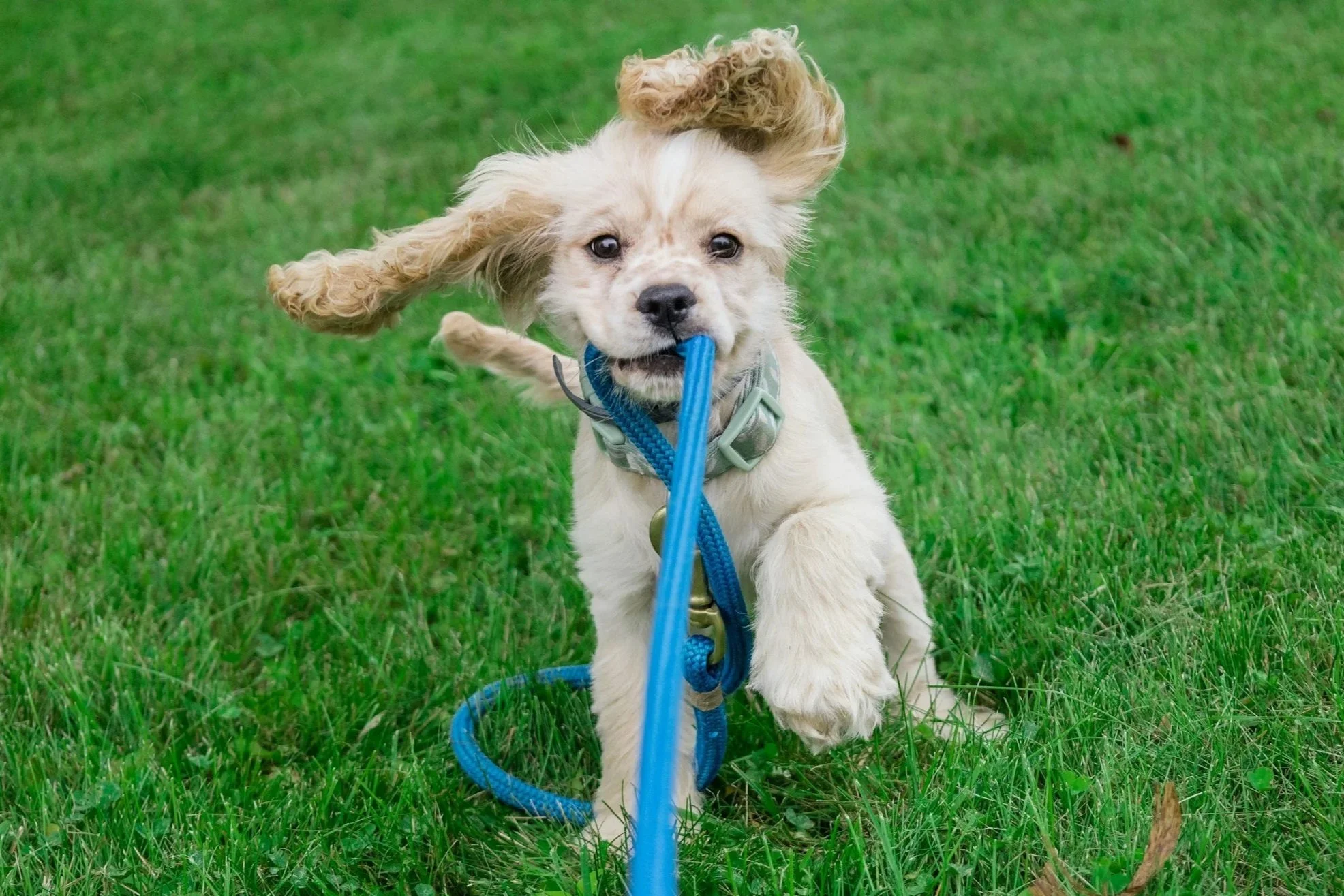
A baby alligator is a puppy who uses their mouth on everything. Hands, clothes, leash, furniture, you. And this is normal dog behavior.
This is not aggression. This is a normal developmental stage where the puppy has is exploring the world with their mouth.
Puppy training is not about shutting this down. It is about giving the puppy outlets via play, chewies and then starter training to help create clarity with full expectations for your pup to be a pup for a beat.
-
Puppy training should start as soon as the dog comes home, usually between 8 and 16 weeks. Waiting is how confusion builds. You can begin with our online learning resources to get rolling at home. Building your communication system via feeding is clutch.
Puppies are always learning. The only question is whether you are shaping that learning or reacting to it later.
-
Puppy training is where everything starts.
We focus on:
communication and engagement
crate training and household structure
early leash skills
socialization and environmental exposure
impulse control and the ability to settle
These are not “extra” skills. This is the foundation that determines what kind of adult dog you end up with.
-
Yes. Opportunity Barks offers puppy training in Philadelphia through 1:1 dog training, puppy classes, and structured programs like Day School and Boarding School.
All of it is built around real-life training so the puppy can function at home, on walks, and in everyday situations.
-
Most puppy training focuses on basic obedience and social exposure.
We focus on how the puppy is learning to exist.
Lifestyle Dog Training is about communication, structure, and real-life function. The goal is not a puppy who can sit on cue. It is a dog that can move through the world without creating problems for itself or the people living with it.
Join us for socials and foudnations.
Explore the path. -
Puppy socialization is not just exposure.
It is the process of teaching a puppy to stay regulated, guide them through their environment, advocate and support them if they need to recover from stimulation, and make appropriate decisions in new environments.
A well-socialized puppy is not the one who says hi to everything. It is the one who can exist in the world without falling apart.
-
Yep, biting is a totally normal developmental puppy behavior.
Biting is driven by teething, arousal, curiosity, and pups learning “bite inhibition” by biting the living sh*t out of everything around them in the absence of their litter mates (apologies to all adult dogs in the house). Puppies are not trying to be difficult; they are being…baby dogs.
The goal is not just to stop biting. The goal is to give the dog outlets to self-soothe while also using play and teaching your pup to give/take, pick up/drop items.
-
Whelp, you usually get a bigger, stronger version of the same challenges.
Mouthing can turn into rough interaction. Jumping becomes harder to manage. Lack of training or guidance can turn into reactivity, frustration, or icomplete ideas that you think the dog “should” know, but they lack clarity.
Early training does not guarantee a perfect dog, but it does prevent a lot of unnecessary problems.